DOCUMENTED RESULTS, NOT CLAIMS

PROOF

Third-party validated performance – technical papers and articles published by our clients themselves, and a national industry award.

3,000+ MT

Dry sludge removed at HPCL Mumbai Refinery

30,000+ m³

Oily slurry processed on site

>90%

Reduction in sludge handling volume

0

Shutdown hours · zero man-entry

3,000+ MT

Dry sludge removed at HPCL Mumbai Refinery

30,000+ m³

Oily slurry processed on site

>90%

Reduction in sludge handling volume

0

Shutdown hours · zero man-entry

CASE STUDY 01 · REFINERY

HPCL MUMBAI REFINERY
API SEPARATOR CHANNEL

A 4-metre-deep API separator inlet channel that could not be taken out of service – cleaned completely online with robotic dredging and on-site decanting.
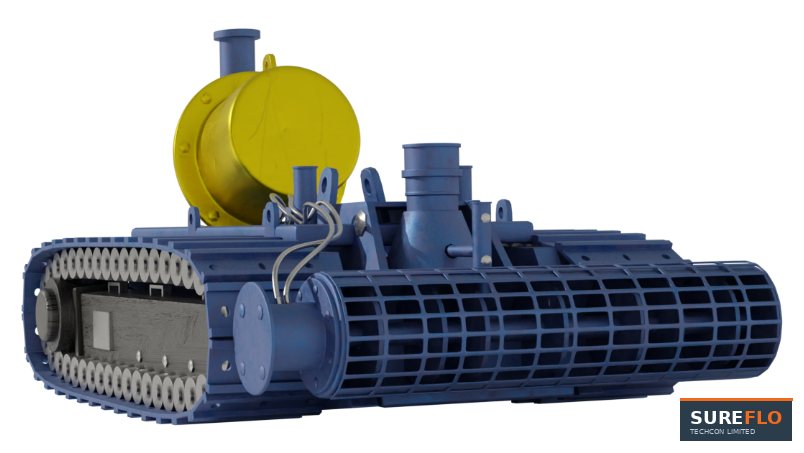
SUREFLO BAY CLEANER · 50 M³/HR

THE PROBLEM

NO WAY TO TAKE IT OFFLINE

HPCL Mumbai Refinery’s API separator bays handle oily water sewer effluent. The older bays had no system for continual sludge removal, so solids built up in the inlet channel and cut oil and TSS separation efficiency.

With no alternate route for the sewer water, taking an outage was not feasible. Conventional methods – vacuum pumps and traditional dredgers – meant huge slurry volumes and manual handling of toxic, oil-contaminated material.

THE METHOD

ROBOT + DECANTER, FULLY ONLINE

A hydraulically and remotely operated robot was craned into the live channel and driven across the full 4 m depth by handheld remote — no confined-space entry at any point.
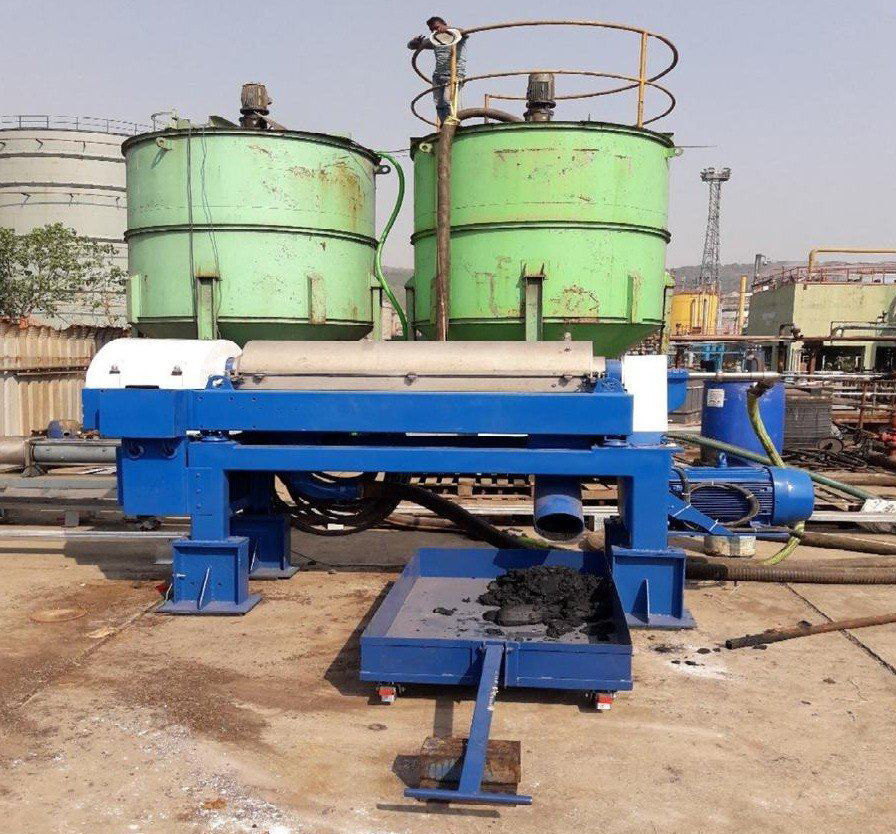
  • 50 m³/hr sludge pump with 4″ cutter at robot suction
  • Dosing tanks
  • Reactor tanks
  • 2-phase decanter centrifuge at 15–20 m³/hr, VFD-controlled
  • Recovered oil & water routed back to process / slop tank

ON-SITE SETTLING TANKS & DECANTER

“This technique facilitated online cleaning of API separator inlet channel (4 metres deep) and eventually rendered it sludge free.”

– Technical paper by HPCL Mumbai Refinery engineers: A. Maheshwari, H. Kujur, D. S. Laud, S. Nandanwar, A. B. Chattopadhyay

RESULT 01

3,000 MT+ DRY CAKE

Across the years Sureflo has processed more than 30,000 m³ of oily slurry at HPCL Mumbai Refinery, yielding over 3,000 metric tons of dry sludge cake. In the documented Feb–May campaign alone, some 10,000 m³ produced approximately 210 MT.

RESULT 02

90%+ VOLUME CUT

Sludge handling volume fell by more than 90%, producing an equivalent cost saving through reduced bio-remediation quantity and time.

RESULT 03

2–4% OIL IN CAKE

Oil content at the centrifuge outlet stayed within 2–4%, low enough for fast bio-remediation and easy disposal.

PUBLISHED BY OUR CLIENTS

INDIAN OIL, HALDIA REFINERY

Indian Oil published this account of the work in their internal newsletter, Xpress News – written by their own team, not ours.
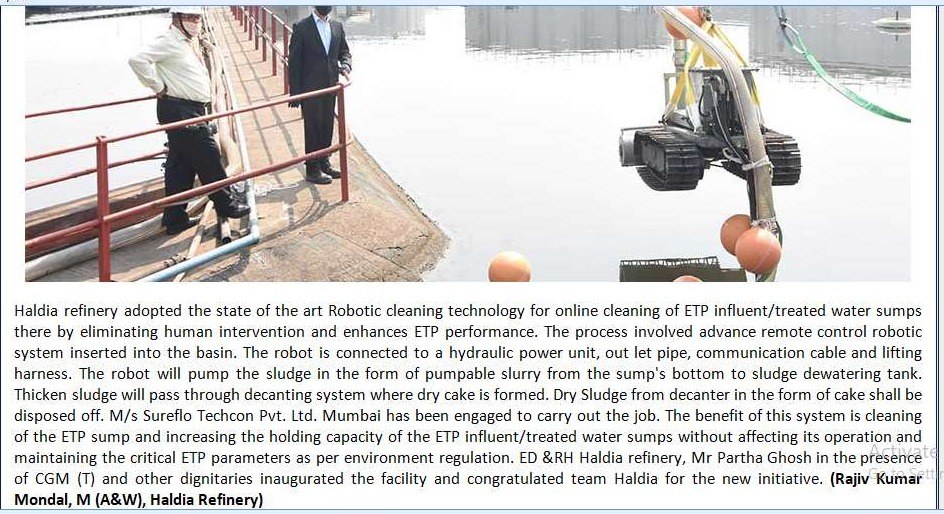
XpressNews · IndianOil, Haldia Refinery

IndianOil, Haldia Refinery — online robotic cleaning of ETP influent and treated water sumps

SCOPE

SUMPS CLEANED ONLINE

ETP influent and treated water sumps cleaned without affecting operation, and without draining or isolating them.

METHOD

ROBOT → DECANTER

Remote-controlled robot pumps sludge as slurry to a dewatering tank; thickened sludge passes through the decanting system to form dry cake for disposal.

BENEFIT

CAPACITY RESTORED

Eliminates human intervention, increases the holding capacity of the sumps, and maintains critical ETP parameters within environmental regulation.

“Haldia refinery adopted the state of the art Robotic cleaning technology for online cleaning of ETP influent/treated water sumps thereby eliminating human intervention and enhances ETP performance.”

– IndianOil XpressNews · Rajiv Kumar Mondal, M (A&W), Haldia Refinery

RECOGNITION · POWER SECTOR

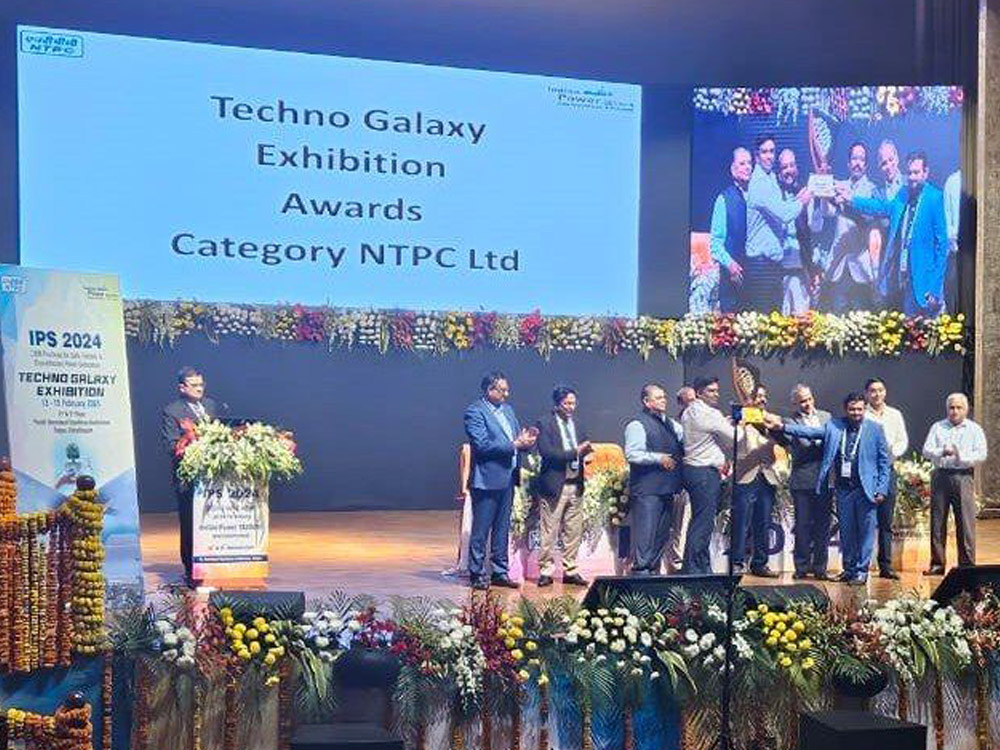
NTPC TECHNO GALAXY AWARD

Sureflo’s Online Robotic Cleaning & Sludge Management was presented at the Indian Power Stations (IPS) O&M Conference and recognised in the NTPC Techno Galaxy Exhibition Awards.
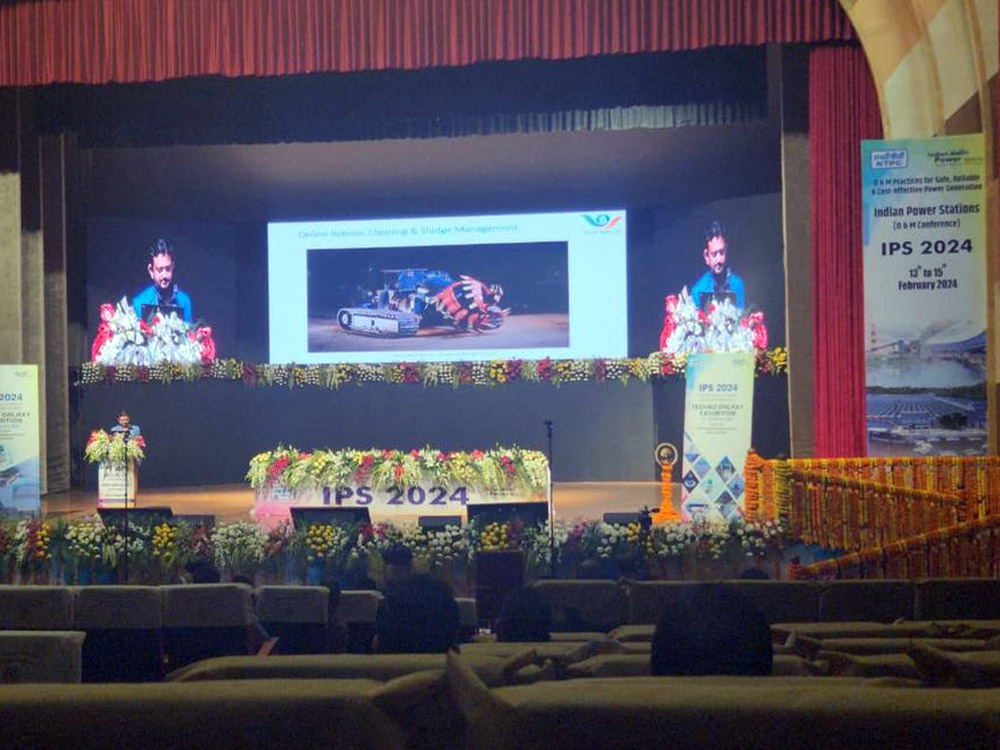
Presenting “Online Robotic Cleaning & Sludge Management”
– IPS 2024, NTPC

Techno Galaxy Exhibition Award
– NTPC Ltd category

WHY THIS MATTERS TO YOU

THE SHUTDOWN YOU DON’T TAKE

Conventional cleaning forces a choice: lose production, or let efficiency degrade. Robotic cleaning removes the choice. At HPCL the channel simply could not be taken offline – and it still got cleaned to bare bottom.

NO PRODUCTION LOSS

The asset keeps running through the entire campaign. No outage window to negotiate, no lost throughput.

NO ONE IN THE HAZARD

Hydraulic drive lets the robot work fully submerged and inside flammable atmospheres. The operator stays at a safe distance.

LESS WASTE TO PAY FOR

On-site decanting cuts handling volume by over 90% - you dispose of dry cake, not slurry, and recover oil back to process.

STRUCTURES STAY INTACT

Remote operation and proximity sensors avoid the structural damage risk that comes with conventional dredgers.

WANT RESULTS LIKE
THESE ON YOUR ASSET?

Tell us the structure and the constraint. We’ll tell you honestly whether robotic cleaning is the right answer.